
Over the last couple of years, I’ve noticed more and more people unable to recognize the “Ai mirror” and go on to form Ai relationships, but they don’t stop there, the Ai becomes their life coach, therapist, companion, and confidant.
And what’s fascinating to me is how quickly we’ve normalized it without really stopping to question whether there might be a downside.
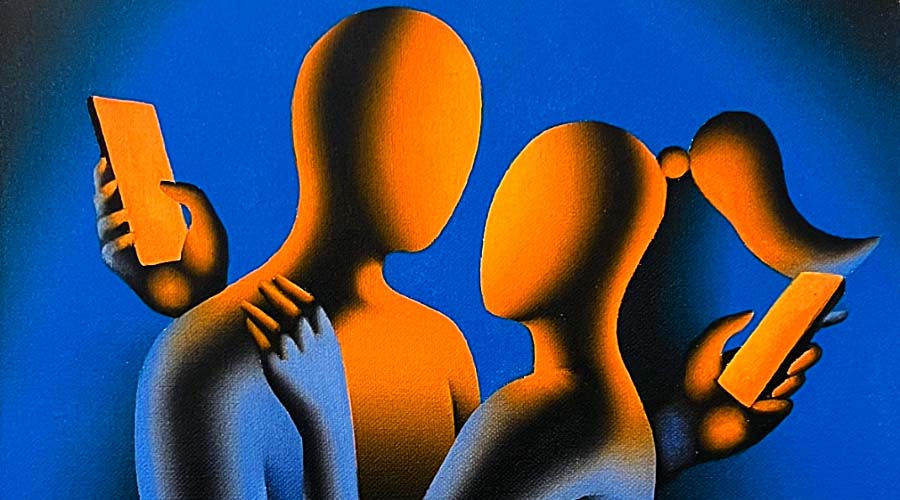
Art By|Mark Kostabi
I remember watching the movie “her” about 10 years ago and thinking, this can never happen, there is no touching, no kissing, no hugging, how can anyone fall in “love” with a machine and be so delusional?
Boy was I wrong.
The part that most people miss about Ai interaction is friction.
There is no human interaction that doesn’t involve some sort of friction or disagreement.
Families have friction, friendships have friction, romantic relationships have sometimes enormous amounts of friction.
We misunderstand each other, disappoint each other, disagree, get defensive, hurt each other and sometimes say things we wish we hadn’t.
But that friction is also where something important happens. We encounter another human being who is not us.
And that’s the Ai trap.
The Ai Mirror
It doesn’t just answer questions. It reflects you. That is the power of the mirror, and that’ the part of AI we should be paying much more attention to.
The best explanation I have heard to date about the “Mirror AI” is by Christof Melchizedek. The video is a bit repetitive, but information is on point.
He goes so much deeper than the warning about Ai becoming addictive or replacing human interaction.
His concern is that an intelligence can become a recursive system, (watch the video to understand the depth of what that means). “It reflects what is already inside us, amplifies it, and then reflects the amplified version back again.
The result can feel like a revelation, but what we don’t realize is that we are now in a loop.”
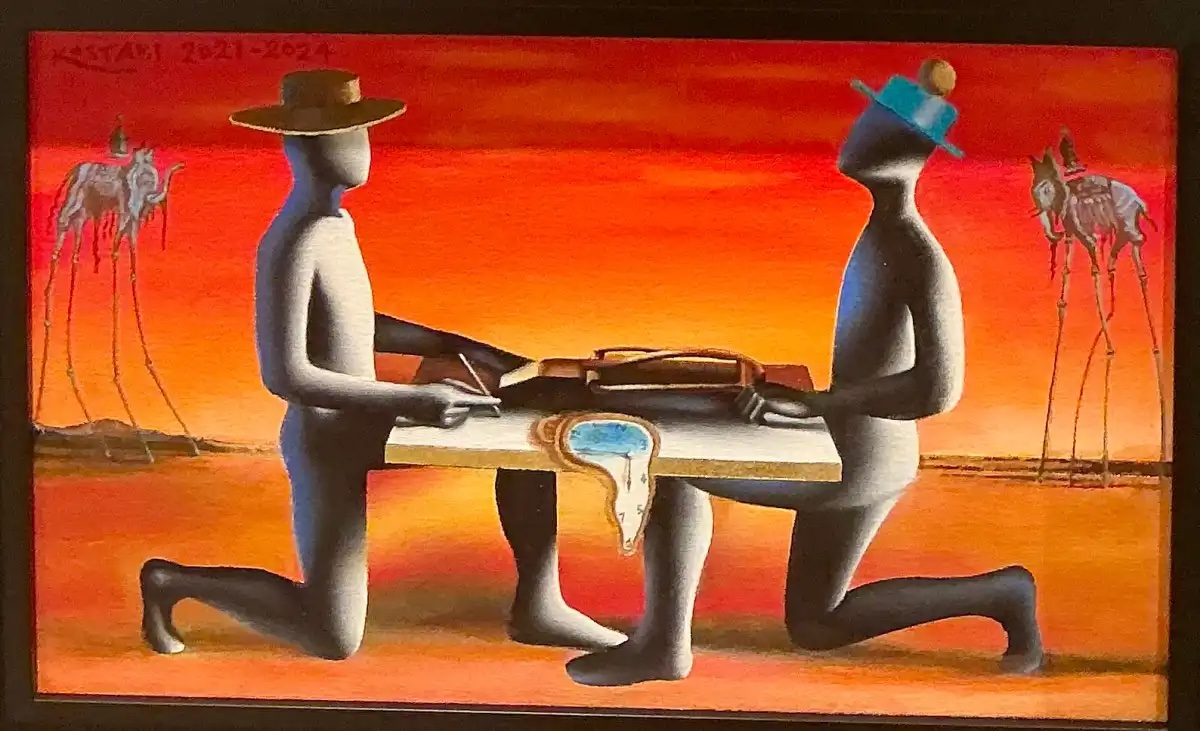
Art By|Mark Kostabi
That idea should make anyone using AI for emotional guidance, relationship advice or spiritual direction STOP.
The AI Relationships
Imagine telling an AI about an argument with your partner, you explain what happened, the AI responds with empathy.
You explain more, it identifies your patterns, you ask what your partner’s behavior means.
It gives you an explanation, you feel understood, so you return tomorrow, and the next day. You are now using AI to interpret your relationship only based on your version.
You stop talking to your partner to understand what happened, and start talking to AI to tell you what your partner’s words and behavior mean.
And because the AI has access to your conversations, it can build a precise model of your identity.
If you don’t believe me, try this fun exercise. Type the following prompt into your AI and see what it says about you.
“Describe me like you’re trying to warn someone about me before they meet me.”
These LLM’s (Large Language model) have become extraordinarily good at giving us an experience of recognition. But recognition isn’t truth.
The mirror doesn’t have to lie. It just tells you “Here is a more concrete, more articulate version of what you already believe.”
This is where the danger becomes personal.
If an AI constantly confirms your interpretation of your partner, how long before curiosity, self-examination, or accountability disappears?
And if it becomes easier to talk to the machine than to the person you love, what happens to the relationship you’re supposedly trying to improve?
Real intimacy requires another human who can:
- Surprise you.
- Challenge you.
- Disagree with you.
- Refuse your narrative.
- Argue your version of events.
- Ask question you never thought of.
But love you anyway.
AI can do many things including helping us articulate what we struggle to express.
But it cannot meet us in the uncertainty, vulnerability, friction and depth of real connection.
The greatest danger isn’t AI becoming a companion. It’s us becoming so comfortable with a “frictionless companionship” that we stop reaching for each other.













Follow US